
Happening Now — what I’m tracking
Last updated: May 2026 · Updated monthly.
A snapshot of what’s on my AI radar right now — models, tools, papers, and shifts in operator workflows. Not a list of everything; a list of what’s earned my attention this month. Skewed toward production reality, not research preprints.

1. The embed-vs-deploy gap is the story of the year
In Q1 2026, roughly 80% of enterprise applications shipped or updated embed at least one AI agent — but only 31% of enterprises have at least one AI agent actually running in production. Embedding is easy. Operationalizing is hard. The gap is roughly 49 percentage points and it’s where almost every interesting operator problem now lives.
Why it matters for operators. The first wave of enterprise AI was demo-driven: a vendor came in, ran a slick demo on synthetic data, signed the deal, and then nothing actually shipped. The second wave — happening right now — is the post-mortem on the first. Operators are learning that agents fail in a different way than software fails: not crashes, but quiet drift, brittle integrations, and outputs that are convincing enough to act on but wrong often enough to bite. The discipline that closes the gap looks more like FP&A review than like software QA.
What’s actually closing the gap. Three things. (1) A named owner — 56% of enterprises now have a dedicated “AI agent owner” or “agentic ops” lead, up from 11% in 2024. Without one, the work stays a hobby project. (2) Real evals, not vibes — companies that invest in governance tooling get >12× more AI projects into production. (3) Integration as a first-class problem — 46% of organizations cite integration with existing systems as the primary deployment blocker, not the model itself.What I’m watching. Whether the named-owner pattern matures into a recognized function (the way RevOps did between 2018 and 2022) or whether it stays a temporary hat that an analyst wears
2. Anthropic just passed OpenAI in business adoption — and the implication is bigger than the headline
As of April 2026, Anthropic’s enterprise adoption sits at 34.4% of businesses, vs. OpenAI’s 32.3% — the first time the order has flipped in two years. Anthropic has roughly quadrupled its business adoption in the past year while OpenAI grew 0.3%. Claude Code alone is reportedly at ~$2.5B in annualized revenue by early 2026 — analysts estimate ~4% of all public GitHub commits worldwide are now authored by Claude Code.
Why it matters for operators. This is not a “team Anthropic vs. team OpenAI” story. It’s a vendor maturity story. Enterprise procurement teams now have at least two genuinely production-grade frontier-model vendors with credible enterprise terms (no training on commercial API inputs, mature compliance posture, real SLAs). That changes the procurement math: you can write down a vendor strategy and actually defend it, rather than handwaving “we’ll use whichever model is best for the task.”
The underrated wrinkle. Microsoft Copilot Studio + Azure AI Studio still lead the orchestration layer at 38.6% primary-platform share. So the model winner and the orchestration winner are diverging. For operators, that means most production stacks will be heterogeneous on the surface (Microsoft for orchestration, Claude or GPT underneath) and the governance burden lives in the seams.What I’m watching. Whether the model-vs-orchestration split holds, and whether anyone produces a credible “single pane of glass” for governing agents that call multiple models through different orchestrators.
3. MCP went from obscure protocol to enterprise integration standard in 18 months
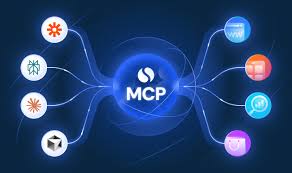
The Model Context Protocol (MCP), introduced by Anthropic in November 2024, now has 9,400+ public servers and has been adopted as the standard integration layer by OpenAI, Anthropic, Hugging Face, and LangChain. Gartner-style forecasts expect 75% of API gateway vendors and 50% of iPaaS vendors to ship MCP features by end of 2026. The 2026 MCP roadmap is squarely on the boring enterprise topics: audit trails, SSO-integrated auth, gateway behavior, configuration portability.
Why it matters for operators. For years, the bottleneck on enterprise AI hasn’t been the model — it’s been plumbing. Every new use case meant a custom integration to whatever system held the data, repeated per vendor, repeated per model. MCP collapses the N × M integration matrix into N + M: every model speaks MCP, every system exposes MCP, integrations become composable. The downstream effect is that “we connected the model to our CRM / data warehouse / ticketing system” stops being a project and starts being a setting.
The operator’s read. If you’re scoping any AI workflow in 2026 that involves more than one internal system, the question isn’t “should we use MCP?” — it’s “which MCP servers do we already have, and what does it take to wrap the holdouts?” Any vendor proposing a bespoke integration stack for a new deployment in 2026 is fighting last year’s problem.
What I’m watching. The governance gap. MCP standardizes how models talk to systems but says relatively little about what they’re allowed to do once connected. Enterprise security teams are starting to ask the right questions, and the answers from the MCP ecosystem are still maturing.